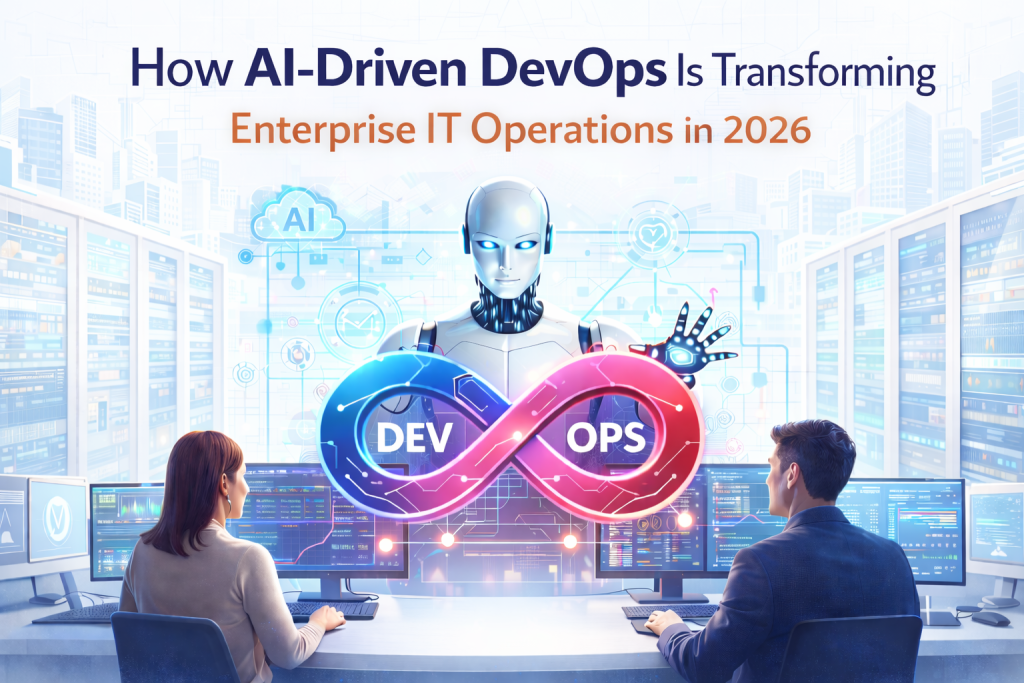
Enterprise IT operations are evolving faster than ever. With increasing pressure to deliver software quickly, maintain reliability, and manage complex cloud environments, organisations are turning to AI-driven DevOps services to stay competitive.
In 2026, artificial intelligence is no longer just an enhancement; it’s becoming the backbone of modern DevOps strategies. From predictive monitoring to intelligent workflow automation, AI is transforming how enterprises build, deploy, and manage technology at scale.
This blog explores how AI is reshaping DevOps practices, the benefits it delivers, and what businesses should consider when adopting it.
The Shift Toward AI-Driven DevOps
Traditional DevOps improved collaboration between development and operations teams, but it still relied heavily on manual oversight and reactive problem-solving. AI takes this a step further by enabling systems to learn from data, identify patterns, and make real-time decisions.
The integration of AI in DevOps allows organisations to move from reactive operations to proactive and predictive management. Instead of waiting for issues to arise, AI helps detect anomalies, optimise performance, and automate repetitive tasks, freeing teams to focus on innovation.
Key Ways AI Is Transforming Enterprise IT Operations
1. Predictive Monitoring and Incident Prevention
One of the most impactful changes is the ability to predict system failures before they occur. AI algorithms analyse logs, metrics, and user behaviour to detect patterns that signal potential problems.
This proactive approach reduces downtime, improves system reliability, and enhances user experience, delivering measurable benefits of AI in IT operations.
2. Intelligent Workflow Automation
Modern enterprises manage thousands of processes daily, from code testing to deployment approvals. With intelligent workflow automation, AI can streamline these processes by:
- Automatically prioritising tasks
- Routing incidents to the right teams
- Triggering self-healing scripts
- Reducing manual intervention
This level of automation speeds up delivery cycles while maintaining governance and compliance.
3. Faster Software Delivery
Speed is critical in today’s digital economy. AI accelerates development by automating testing, detecting code vulnerabilities, and recommending improvements.
By integrating AI into CI/CD pipelines, organisations can release updates more frequently and with greater confidence, one of the core goals of enterprise DevOps transformation.
4. Enhanced Decision-Making Through Data Insights
AI provides deep analytics that help leaders make informed decisions. Instead of relying solely on historical reports, teams can access real-time insights into performance, user behaviour, and system health.
This data-driven approach supports better capacity planning, cost optimisation, and strategic planning across IT departments.
The Role of Cloud in AI-Driven DevOps
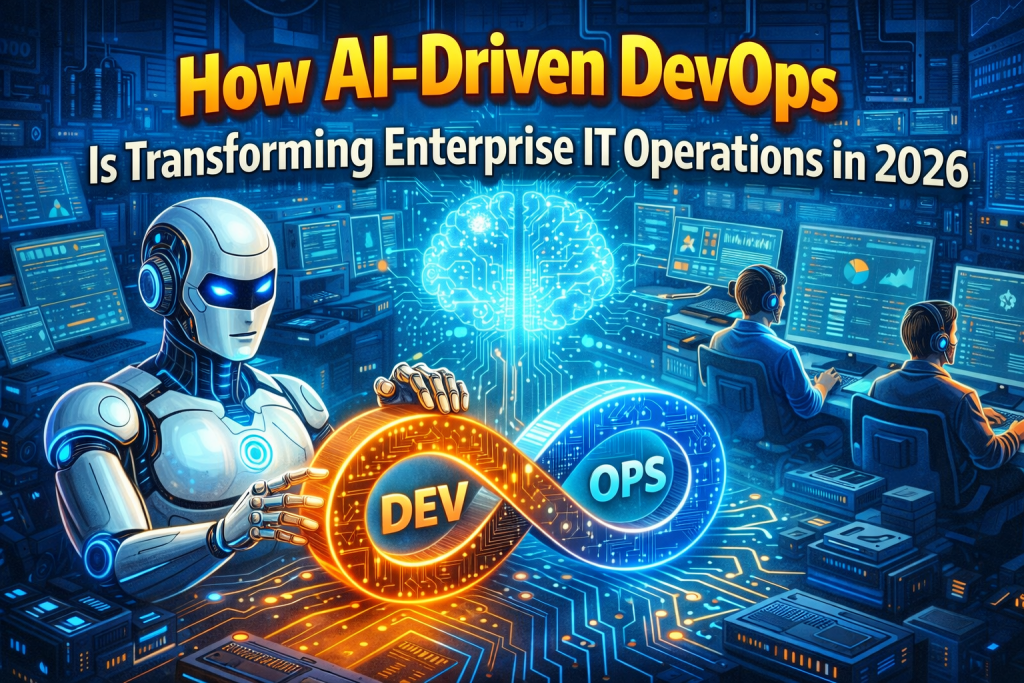
AI and DevOps thrive in cloud environments, where scalable infrastructure and vast data resources enable advanced automation.
Cloud and DevOps integration allows enterprises to:
- Scale AI models efficiently
- Automate infrastructure provisioning
- Improve disaster recovery
- Reduce operational overhead
As hybrid and multi-cloud strategies become more common in 2026, AI plays a key role in managing complexity and ensuring seamless operations across platforms.
Atlassian Ecosystem and AI Automation
Many enterprises rely on tools within the Atlassian ecosystem to manage workflows. AI enhances these platforms by introducing smarter automation and insights.
For example, Jira automation for enterprises can now:
- Predict ticket resolution times
- Automatically assign issues
- Identify recurring bottlenecks
- Recommend workflow improvements
These capabilities make Jira an even more powerful tool for managing large-scale development and operations teams.
The Growing Demand for DevOps Consulting
As AI adoption increases, many organisations seek expert guidance to implement it effectively. DevOps consulting services help enterprises design strategies, choose the right tools, and ensure seamless integration with existing systems.
Consultants typically focus on:
- Assessing current maturity levels
- Defining automation roadmaps
- Implementing AI-enabled pipelines
- Training teams on new workflows
This structured approach reduces risk and accelerates time to value.
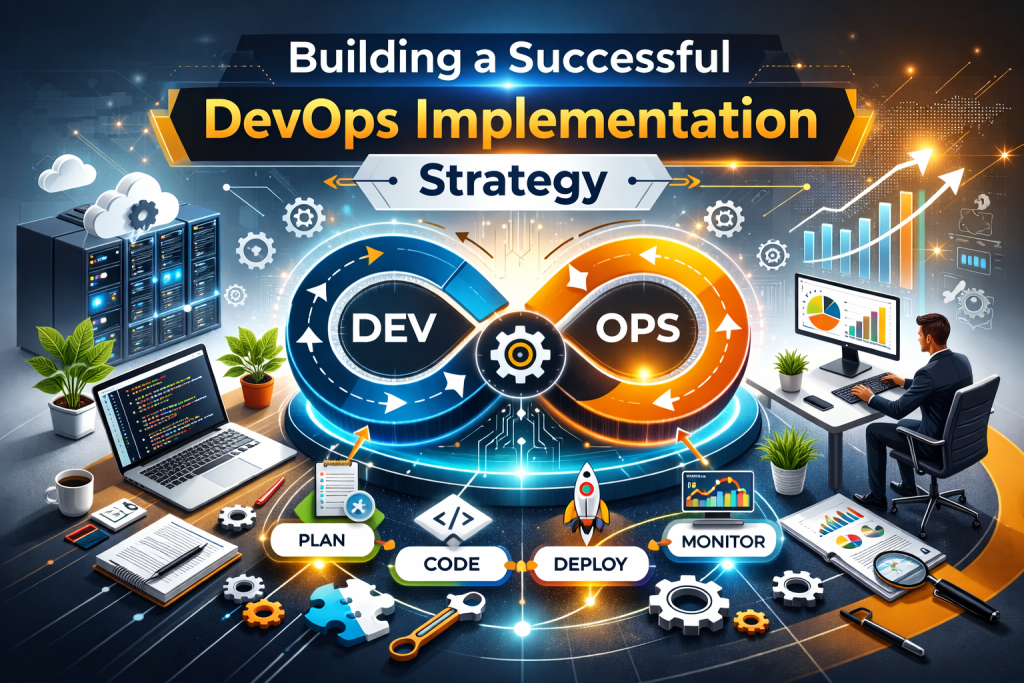
Building a Successful DevOps Implementation Strategy
Adopting AI isn’t just about technology; it requires a clear DevOps implementation strategy that aligns with business goals.
Key Steps Include:
- Assess Current Processes
Identify manual bottlenecks and inefficiencies.
- Define Automation Priorities
Focus on high-impact areas like monitoring and testing.
- Integrate AI Gradually
Start with pilot projects before scaling across teams.
- Invest in Skills and Training
Ensure teams understand how to work with AI-driven tools.
- Measure Outcomes
Track metrics such as deployment frequency, downtime, and productivity.
Challenges Enterprises Should Prepare For
While the benefits are significant, implementing AI-driven DevOps comes with challenges:
- Data quality and integration issues
- Change management and cultural shifts
- Security and compliance considerations
- Initial investment costs
Addressing these early ensures a smoother transformation and maximises ROI.
The Future of IT Process Automation
In 2026 and beyond, IT process automation will continue evolving toward fully autonomous operations. AI will increasingly handle routine tasks such as incident resolution, resource allocation, and performance tuning.
This shift doesn’t replace IT teams; it empowers them to focus on strategic initiatives like innovation, customer experience, and digital growth.
Why Enterprises Are Investing Now
Organisations adopting AI-driven DevOps are seeing tangible outcomes:
- Faster time to market
- Reduced operational costs
- Improved system reliability
- Better collaboration across teams
- Greater scalability
These advantages make AI not just a technological upgrade but a strategic business investment.
Final Thoughts
AI is redefining how enterprises manage technology, and DevOps is at the centre of this transformation. By combining automation, predictive analytics, and intelligent decision-making, AI-driven DevOps services enable organisations to operate more efficiently, innovate faster, and deliver better digital experiences.
As 2026 unfolds, businesses that embrace AI-powered workflows, invest in the right tools, and adopt a structured transformation strategy will be best positioned to thrive in an increasingly digital world.